

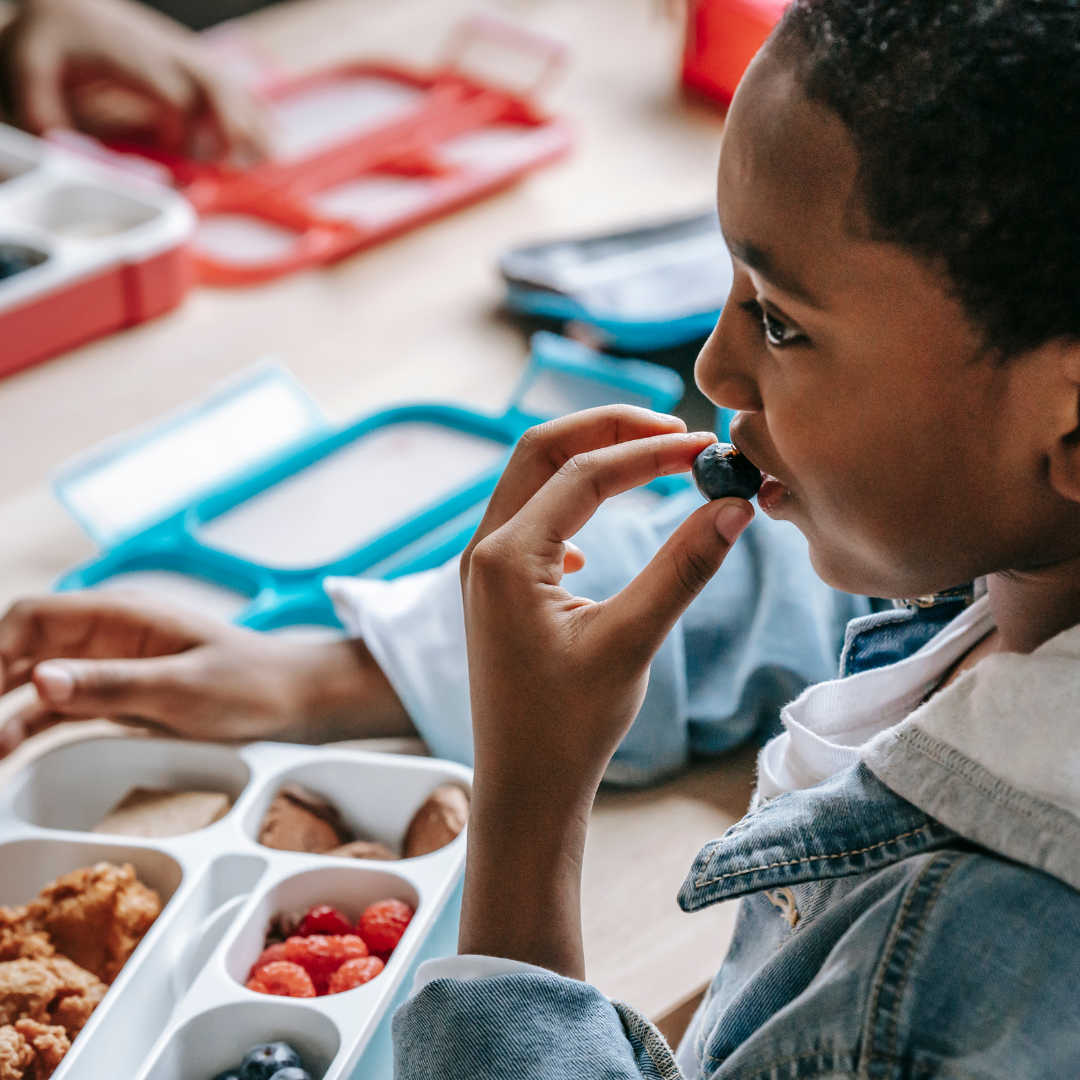

Healthy food access in early childhood is not just about personal choice it is about how those choices are shaped by systems, policies, and infrastructure that determine what food is available, affordable, and accessible to families.
Black children face food insecurity in America
Vegetables support brain development, immune health, and physical growth during the most critical years of life. Yet many Black families face structural barriers to accessing fresh, affordable food.
When Black children consistently have affordable, proximate access to meals with vegetables:
03 · The Systems We're Interrupting
Black families are often blamed for food-related outcomes while systemic barriers are ignored.
Limit access to fresh food through disinvestment and zoning
Prioritize convenience over nourishment
Treat healthy food as optional rather than essential
04 · The Shift We're Making
Through an Afrofuturist lens, nourishing meals with vegetables are about food sovereignty, cultural relevance, and autonomy. We center access first and design systems that support families’ ability to make nourishing choices.
We center access first and design systems that support families’ ability to make nourishing choices with communities as experts, not recipients.
This approach moves beyond awareness and toward lasting change.

We examine how policy, pricing, and infrastructure shape food access for Black families.

We design interventions that expand autonomy, availability, and affordability for families.

We center families and communities as experts in every decision and intervention.

We adjust continuously based on feedback and outcomes not external metrics alone.

When systems are designed to work for Black families, nourishing meals become the everyday not the exception. We are building that world now.
“From the memories of our ancestors to the futures we are dreaming into being this is the story of where we’ve been, what we’re naming, and the world we’re building together.”
© NBCDI · National Black Child Development Institute